Understanding Constipation

Understanding Constipation
Types of Constipation
The Difference Between Occasional & Chronic Constipation

Occasional Constipation
Sudden or short periods of difficult,
infrequent, or incomplete bowel
movements

Chronic Constipation
A medical condition with constipation symptoms that:
What Could Small,
Hard Stools Mean?
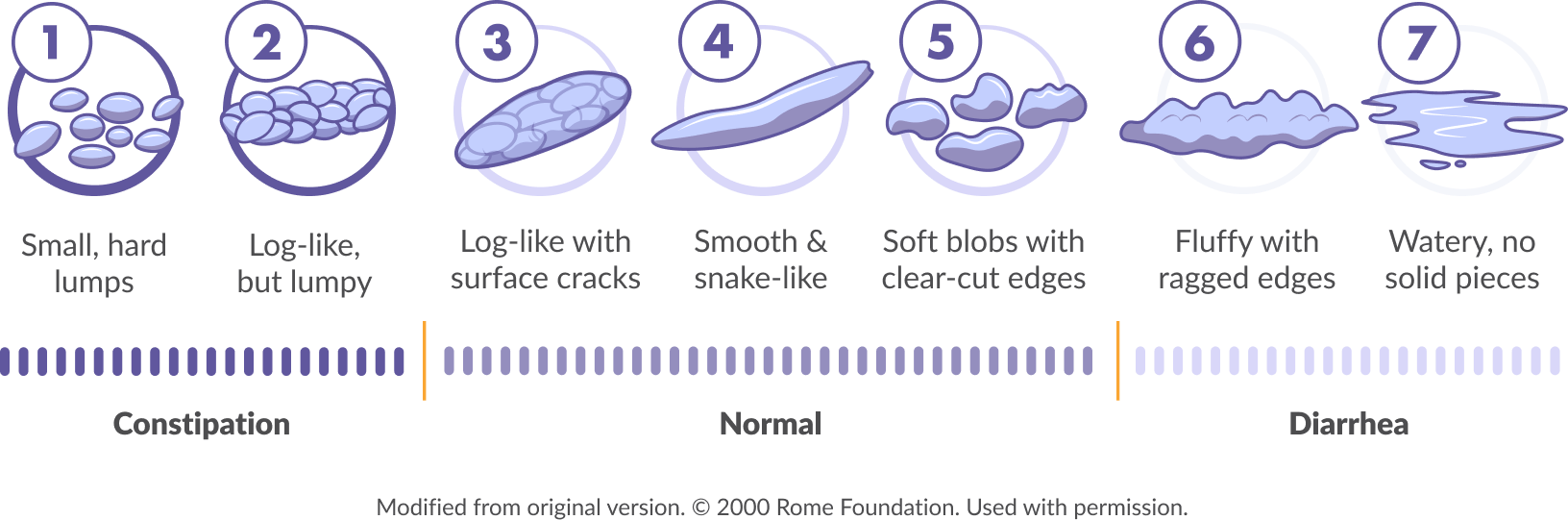
The Bristol Stool Form Scale makes it easier to understand and talk about stools (poop). The scale helps assess how long stools have been in the bowel by assigning them a number based on their size, shape, and consistency.
IBS-C & CIC
Your constipation could be chronic, not occasional
If you’re experiencing constipation symptoms again and again, you’re not alone. IBS-C (Irritable Bowel Syndrome with Constipation) and CIC (Chronic Idiopathic Constipation) are two types of chronic constipation. “Idiopathic” means the cause is unknown.
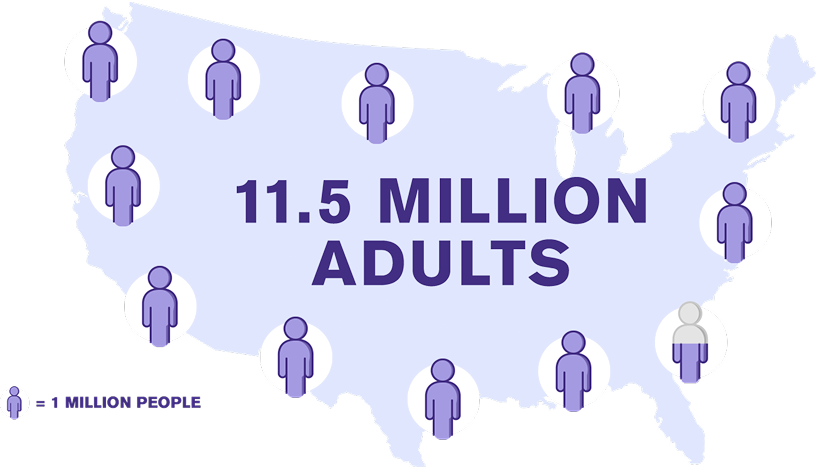
While estimates vary, nearly 11.5 million
adults in the U.S. suffer from IBS-C.*
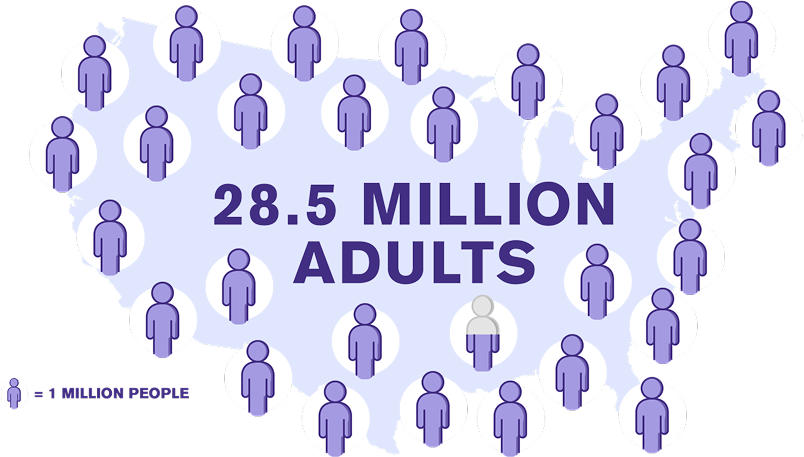
While estimates vary, as many as 28.5 million
adults in the U.S. suffer from CIC.*
*Estimated IBS-C/CIC sufferers within the U.S. through Kantar LINZESS Tracking Study; Jan-Dec 2020; general population sample only.
Many people spend years dealing with constipation before getting a diagnosis. See what helped three real people with constipation get some clarity about their gut issues.
IBS-C & CIC Symptoms & Causes Comparison
 Lumpy or hard stools
 Incomplete bowel movements
 <3 bowel movements a week
 Abdominal (belly) pain
 Discomfort
 Bloating
 Lumpy or hard stools
 Incomplete bowel movements
 <3 bowel movements a week
The cause of IBS-C is unknown, but researchers believe several factors may contribute to the condition.

Fluid absorption: the colon may be absorbing too much fluid from stools, or the muscles in the colon may be moving too slowly. This can cause stools to become dry, hard, and difficult to pass.

Nerve sensitivity: the nerves in the intestines may be extra sensitive, causing sufferers to feel more belly pain or discomfort than those who do not have IBS‑C.

Brain-bowel connection: there could be a miscommunication between the brain and the bowel (gut) that causes a change in bowel movements.
Researchers believe several factors may contribute to the development of CIC.

Fluid absorption: the colon may be absorbing too much fluid from stools, or the muscles in the colon may be moving too slowly. This can cause stools to become dry, hard, and difficult to pass.

Nerve sensitivity: some patients have less nerve sensitivity, which may reduce the urge to have a bowel movement. Other patients may have extra-sensitive nerves, which can cause discomfort.

Muscle contractions: the muscles of the colon may be contracting too slowly, which can reduce the movement of stool through the colon and cause infrequent stools.
How Do Doctors Diagnose
IBS-C & CIC?
Dr. Susan Lucak, a gastroenterologist who practices in New York City, explains
what she looks for and how she helps her patients with IBS-C and CIC.

Could It Be More Than Occasional Constipation?
Answer 5 quick questions to learn about IBS-C and CIC to prepare for your appointment.
Constipation Treatment Options
Types of Treatments & When to consider a Prescription
When you’re experiencing constipation, your initial reaction might be to grab an over-the-counter treatment from the pharmacy aisle. But if your symptoms keep coming back and you don’t know why, it could be a chronic medical condition. You may want to talk to your doctor about a daily prescription treatment.

Over-the-Counter Treatments
Over-the-counter medications for occasional constipation may include:
These treatments may provide relief for occasional constipation, but should not be taken for longer than 1 week unless directed by a doctor.
All trademarks are the property of their respective owners.

Prescription Medications
If you have more than occasional constipation, you may want to talk to a doctor about prescription options like LINZESS.
†Abdominal symptoms were studied in combination, not individually.
Pediatric Functional Constipation
Help Relieve Your Child's Functional Constipation
(Ages 2–17 Years)
If your child has been struggling to go to the bathroom regularly or suffering from difficult bowel movements, it may be a sign they have a medical condition known as functional constipation.
It may be time to talk to a doctor about LINZESS, the first and only prescription medicine approved for functional constipation in children and adolescents
2–17 years old.
How Does LINZESS Help with Functional Constipation?

What is LINZESS?
If your child has functional constipation, your child’s doctor can prescribe one 72-mcg
LINZESS pill, just once a day—there's no need to measure or adjust doses.

You Could Pay as Little as $30 for a 30‑day or 90‑day Prescription‡
The LINZESS savings card enables many eligible, commercially insured patients to pay as little as $30 for a 30‑day or 90-day prescription.‡
Already have a savings card? Activate now.
‡Maximum savings limit applies; patient out-of-pocket expense may vary. This offer is available to patients with commercial insurance coverage and a valid LINZESS prescription. Offer not valid for patients enrolled in Medicare, Medicaid, or other federal or state healthcare programs. This offer is not valid for cash-paying patients. Please see Program Terms, Conditions, Privacy Notice, and Eligibility Criteria.
Check My Symptoms
Find Relief
LINZESS® (linaclotide) is a prescription medication used to treat irritable bowel syndrome with constipation (IBS-C) in adults and in children and adolescents 7 years of age and older, chronic idiopathic constipation (CIC) in adults, and functional constipation (FC) in children and adolescents 2 years of age and older. “Idiopathic” means the cause of the constipation is unknown. It is not known if LINZESS is safe and effective in children with FC less than 2 years of age or in children with IBS-C less than 7 years of age.
IMPORTANT RISK INFORMATION
Before you take LINZESS, tell your doctor about your medical conditions, including if you are:
Tell your doctor about all the medicines you take, including prescription and over-the-counter medicines, vitamins, and herbal supplements.
Side Effects
LINZESS can cause serious side effects, including diarrhea, which is the most common side effect and can sometimes be severe. Diarrhea often begins within the first 2 weeks of LINZESS treatment. Stop taking LINZESS and call your doctor right away if you get severe diarrhea during treatment with LINZESS.
Other common side effects of LINZESS in people with IBS-C and CIC include gas, stomach-area (abdomen) pain, and swelling, or a feeling of fullness or pressure in your abdomen (distention).
Call your doctor or go to the nearest hospital emergency room right away if you develop unusual or severe stomach-area (abdomen) pain, especially if you also have bright red, bloody stools or black stools that look like tar.
These are not all the possible side effects of LINZESS. For more information, ask your doctor or pharmacist.
You are encouraged to report negative side effects of prescription drugs to the FDA. Visit www.fda.gov/medwatch or call 1-800-FDA-1088.
If you are having difficulty paying for your medicine, AbbVie and Ironwood may be able to help. Visit AbbVie.com/PatientAccessSupport to learn more.
Please see full Prescribing Information, including Boxed Warning, and Medication Guide.
US-LIN-260217

For adults with Irritable Bowel Syndrome with Constipation (IBS-C) or Chronic Idiopathic Constipation (CIC)

Answer a few quick questions about your symptoms.

Connect with a doctor online to find out if it could be IBS-C or CIC.

If approved, pick up your prescription from your local pharmacy.
*Third-party website; does not constitute an endorsement or recommendation by AbbVie. A fee will be charged by the telemedicine provider.
You are now leaving LINZESS.com
By clicking “Acknowledge and Continue” above, you acknowledge and agree that neither AbbVie nor Ironwood does, in any way, endorse or recommend UpScript, a telemedicine provider, the qualifications of any physician associated with UpScript, or the quality of medical care any of those physicians can provide. You also acknowledge and agree that neither AbbVie nor Ironwood makes any guarantees that using UpScript will result in your desired outcome. It is wholly and solely your responsibility to assess the qualifications of a potential physician. AbbVie and Ironwood recommend that you meet and discuss the benefits and risks of all potential treatments with the potential physician. ABBVIE, IRONWOOD, AND THEIR RESPECTIVE AFFILIATES HEREBY DISCLAIM ANY LIABILITY ARISING FROM YOUR USE AND/OR RELIANCE ON THE INFORMATION CONTAINED ON THE UPSCRIPT WEBSITE. If you agree to the above, click “Acknowledge and Continue” to proceed to the UpScript website. If you do not agree to the above, click “Cancel” to remain on LINZESS.com.